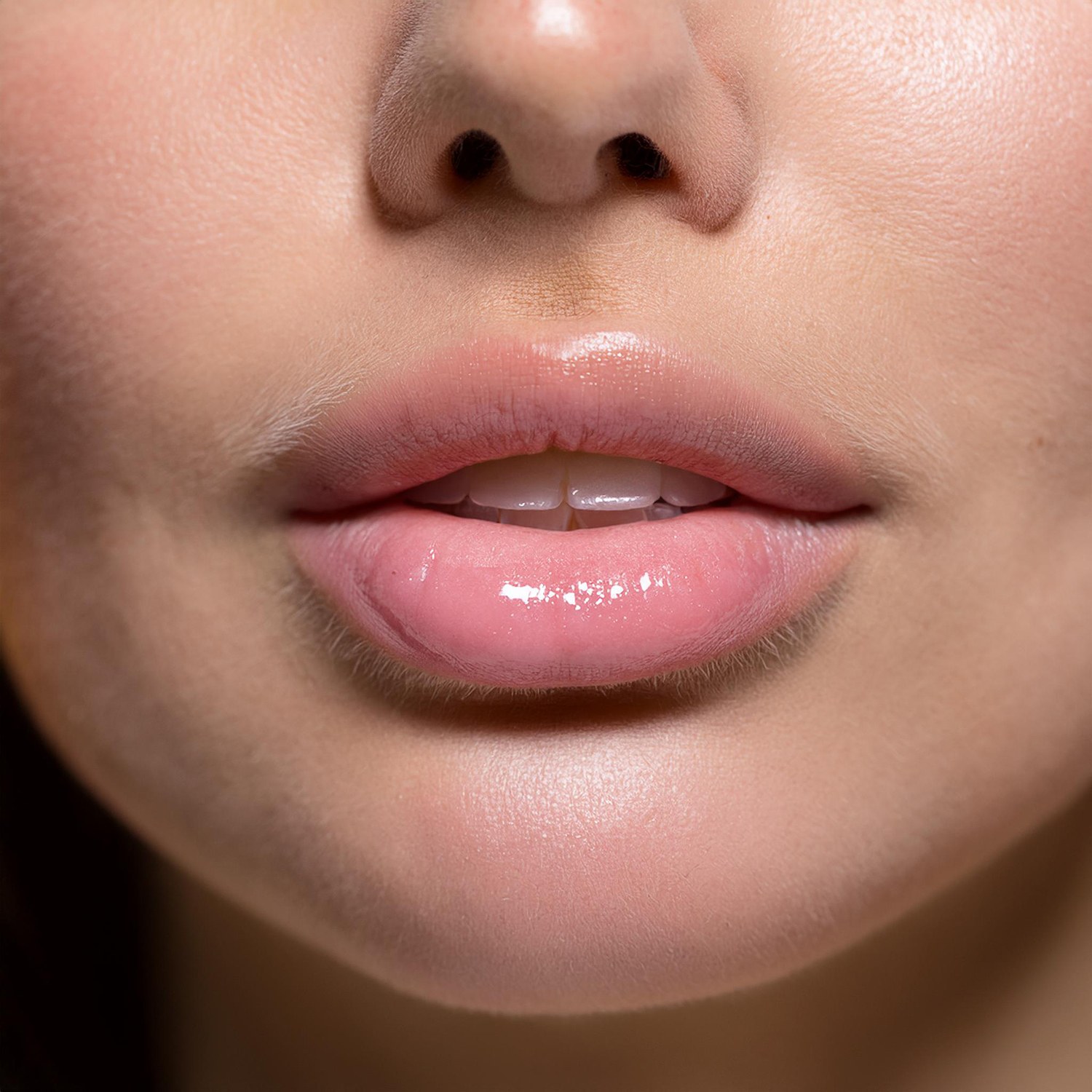
Lip balm or lip gloss? Nourish your lips even during summer and give them a great colour and shine with a balm or gloss that we will create together in this tutorial blog post. The best thing is that you can mix the colour you like yourself. And all of this from natural raw materials. Let’s get started.
About this recipe
Take a look with us at creating three different types of lip care — together we will prepare a creamy lip balm with grape skin extract, a solid lip balm and a lip gloss. Do you prefer lip balm or lip gloss? This tutorial post was prepared for you by Klára Oláhová.

Main benefits
- Three tutorials in one
A creamy balm with grape skin extract, a solid balm and a lip gloss — choose whichever you prefer.
- The colour is up to you
You mix the colour yourself: with mica powder or with grape skin extract, which also serves as a natural colourant.
- From natural raw materials
You can make all three products from natural raw materials.
- Vitamins and antioxidants
Grape skin extract is a source of vitamin C and antioxidants, and almond oil contains vitamins A and E as well as minerals.
- Lasts 6 months
A balm and a gloss prepared in this way will last for 6 months, the solid balm and the gloss at room temperature.
Product properties
Lip balm and lip gloss — theory
Before we start making lip gloss or lip balm, let’s say something about extracts. Why extracts in particular? Many cosmetic products contain extracts (concentrates) thanks to their healing effects.
An extract is a derivative from plants or their parts and is usually prepared from dried plant parts. It should be noted that not every part of a plant contains the same active substances; for example, the substances contained in the kernels of fruit do not necessarily occur in the peel of the fruit. Thanks to modern technologies, laboratories are able to concentrate the healing properties of plants.
The effects of an extract do not differ from the effects of the herb itself. Plant extracts can be liquid, semi-solid or solid. In the case of solid extracts, extraction is carried out with the help of solvents, which evaporate after the entire process, resulting in a pure powder without chemical additives.
Labelling of the extract on the packaging of a cosmetic product
We distinguish two types of extracts: standardised and broad-spectrum.
With a standardised extract, the content of active substances for a given plant is unified worldwide, which means that wherever you are in the world, it will have the same amount of these substances. Extracts have a very precisely described chemical composition, specifying how much of what is contained in them. We can recognise an extract in a cosmetic product by the fact that the name of the plant is supplemented with the percentage of the active substance — Ginseng (Panax ginseng), root extract with 80 % ginsenosides and so on.
With a broad-spectrum extract, it is not possible to determine exactly how much and which substances we will find in a given batch. It is designated, for example, as 10:1, 40:1, 5:1 and so on. This designation indicates how many kilograms of raw material were used for 1 kg of extract. With 5:1, 5 kg of starting raw material were used, from which 1 kg of extract was obtained. However, this does not mean that the extract is 10 times stronger. Not every part of the starting raw material has the same proportion of active substances. Therefore, the extract will never be 10 times stronger. Unfortunately, it is also not possible to determine how many times stronger it is. It is generally said that extracts are mostly 7 – 8 times stronger.
Learn more about extracts and study this topic in depth in the post on homemade herbal extracts or on CO2 extracts on our blog.
Key raw materials in the recipe
Below we go through the raw materials we use in our three tutorials and explain why they are in the recipe and what they bring to the product.
Vegetable petroleum jelly
Vegetable petroleum jelly is the basis of all three recipes — in the creamy balm we mix it with almond oil into a mushy mass, while in the solid balm and the gloss it forms the carrier component in which the mica powder is dispersed. The solid balm is melted with it in a water bath and sets again once it has cooled.
Almond oil
For making the gloss and the creamy balm we chose almond oil. Almond oil is one of the basic oils used in the manufacture of cosmetics. It is the carrier oil of many products and combines very well with other oils. It contains vitamins A and E (natural antioxidants) and minerals (calcium, magnesium, potassium). It hydrates the skin and is not absorbed so quickly, which makes it an ideal cosmetic ingredient. It is particularly suitable for dry, sensitive and irritated skin. It softens and revitalises it, restores and nourishes it.
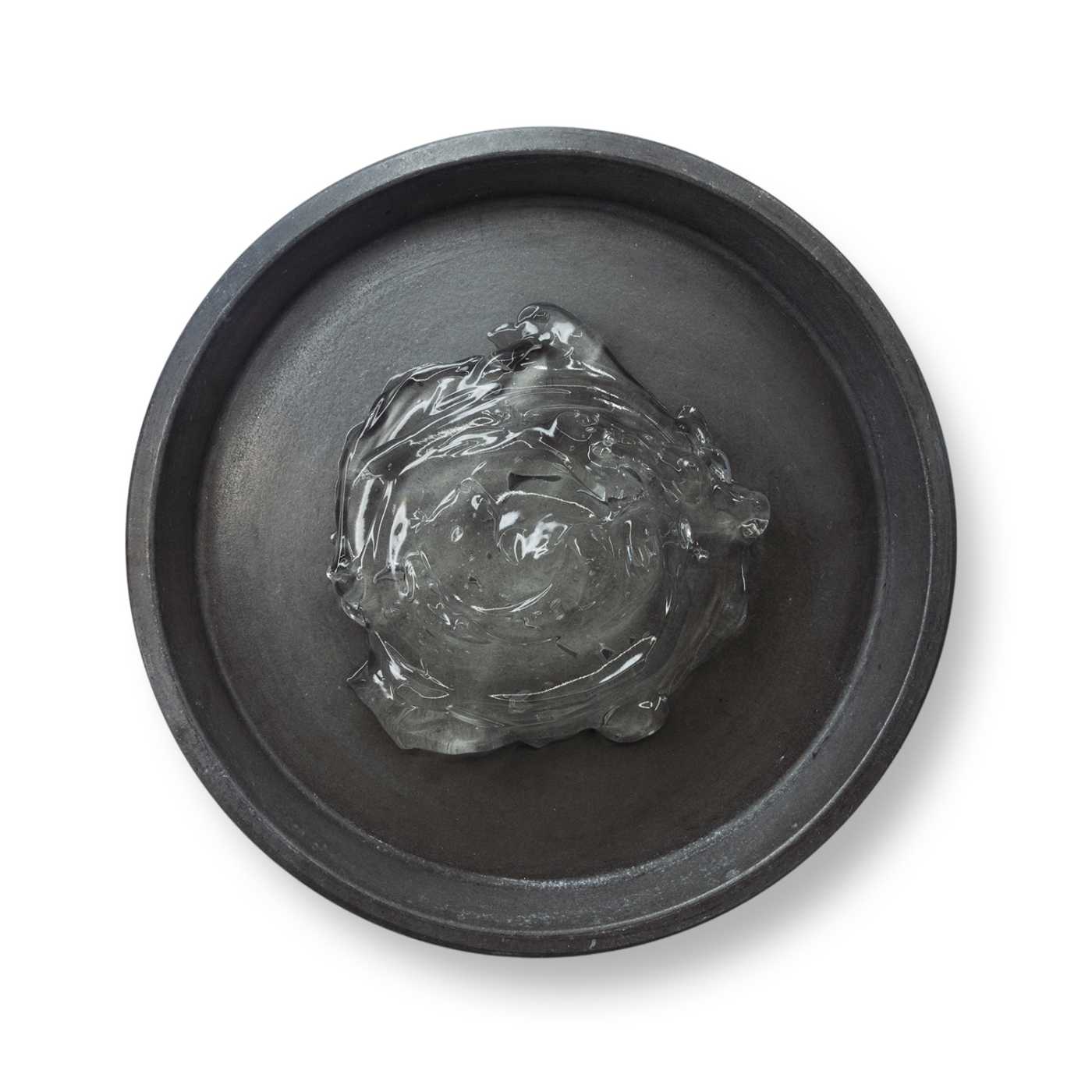
Aloe vera gel
We use aloe vera gel in the creamy lip balm. It is in the gel that the grape skin extract in powder form is mixed — stir until the powder has dissolved homogeneously, and then add the coloured gel to the mixture of petroleum jelly and almond oil.
Grape skin extract
One of the options for colouring and at the same time adding vitamins and antioxidants to the balm is to use a grape skin extract. Grape skin extract is a primary source of phytonutrients, which are beneficial in maintaining heart health, as well as a source of vitamins and minerals for the overall health of the body. It is a major source of vitamin C and antioxidants, which is why it is a suitable anti-inflammatory substance in your products. Likewise, in formulations it supports immunity and the overall health of the skin. The extract comes in the form of a fine red powder, which also serves as a natural colourant. It is water-soluble.
Mica powders
In the solid balm and in the lip gloss the colouring is provided by a mica powder of your choice. Get inspired and reach for mica powders and create your own colour shade of balm or gloss for your lips. Do not be afraid to add coloured glitter as well — you will give the product an interesting effect. You will find specific shades in the inspiration table below.
Vitamin E
For even greater enrichment with active substances you can also add vitamin E (approx. 3 drops) to the almond oil, but do not forget to mix thoroughly before adding it to the petroleum jelly. You can read about the beneficial effects of vitamin E in cosmetics in our older blog article.
The recipes
Below are the three recipes exactly as the author prepared them — the content of the raw materials is given in grams for one batch of the product. In the shopping list you will find the raw materials we have in our range; the mica powder is represented there by one of the recommended shades, so choose the one you like best.
Recipe 1 — Creamy lip balm with grape skin extract
In the first tutorial we will prepare together a creamy lip balm with grape skin extract.
Shop the ingredients for this recipe
Untick what you already have- Aloe Vera Gel, 200 guses 5 gin stock€7.99
| Raw material | Content |
|---|---|
| Vegetable petroleum jelly | 3.0 g |
| Almond oil | 5.8 g |
| Aloe vera gel | 5.0 g |
| Grape skin extract — powder | 2.0 g |
Recipe 2 — Solid lip balm
The second type of balm for which we bring you a tutorial is a solid lip balm.
| Raw material | Content |
|---|---|
| Vegetable petroleum jelly | 4.5 g |
| Mica powder of your choice | 0.5 g |
Recipe 3 — Lip gloss
The third product is a lip gloss — you make it from a mixture of vegetable petroleum jelly, almond oil and mica powder.
| Raw material | Content |
|---|---|
| Vegetable petroleum jelly | 4.0 g |
| Mica powder of your choice | 0.5 g |
| Almond oil | 9.0 g |
Method
Creamy lip balm with grape skin extract
- Disinfection
Disinfect all tools and containers.
- Petroleum jelly with oil
In a smaller container mix the vegetable petroleum jelly and almond oil, stirring until a mushy mass forms.
- Colouring the gel
In a new container mix the aloe vera gel with the grape skin extract in powder form, stirring until the powder has homogeneously dissolved. (You can adjust the amount of powder added for less or more intense colouring.)
- Combining the mixtures
Add the coloured gel to the mixture and stir until you obtain a smooth creamy consistency.
- Storage
Store the prepared creamy balm in a cosmetic container.

Solid lip balm
- Disinfection
Disinfect all tools and containers.
- Petroleum jelly with mica powder
In a smaller container, preferably a glass one, mix the vegetable petroleum jelly and the mica powder.
- Stirring
Stir the mixture thoroughly until the powder is homogenised in the paste-like mass.
- Melting water bath
Place the container with the product in a water bath and stir until the mixture has melted.
- Pouring
Let the melted mixture stand for a few seconds, stir it and pour it into a balm container.

Lip gloss
- Disinfection
Disinfect all tools and containers.
- Mixing the raw materials
In a smaller container mix the vegetable petroleum jelly, almond oil and mica powder. Stir the mixture thoroughly until the powder has dissolved.
- Pouring into the container
Stir the liquid mixture and pour it into a container (I poured it into a roll-on container).
Shelf life and enrichment
A creamy balm prepared in this way will last for 6 months. For even greater enrichment with active substances you can add vitamin E (approx. 3 drops) to the almond oil, but do not forget to mix thoroughly before adding it to the petroleum jelly.
The solid balm will likewise last for 6 months, at room temperature. The lip gloss will also last for 6 months at room temperature — and here too, to enrich it with nourishing substances, you can add vitamin E (approx. 3 drops) to the almond oil, but do not forget to mix thoroughly.
You can read about the beneficial effects of vitamin E in cosmetics in our older blog article.
Lip balms and lip glosses — inspiration
Get inspired and reach for mica powders and create your own colour shade of balm or gloss for your lips. Do not be afraid to add coloured glitter as well — you will give the product an interesting effect.
| Shade | Mica powders |
|---|---|
| Creamy balm | mica powder Aphrodite, Creme de la creme, Arctic white, AquaPearls champagne, snowball |
| Yellow balm | mica powder Sunburst sparkle, Bonny buttercup, AquaPearls Gold (for a glittering effect you can use the dust sparkle version) |
| Pink balm | mica powder Pink pearl, Fiery fusion, Silken deep rose, Blushed pink, Candy, Cool pink |
| Red balm | mica powder AquaPearls Mulberry wine, Warm spice |
| Purple balm | mica powder Burlesque, Deep lilac |
| Blue balm | mica powder AquaPearls ocean breeze, Blueberry, Blue moon |
| Green balm | mica powder Bejeweled, Harlequin shimmer, Aquarius |
And many more…
Frequently asked questions about the recipe
Practical questions about the lip balms and the lip gloss — shelf life, colouring, enrichment with vitamin E and the labelling of extracts.
How long does a homemade lip balm or lip gloss last?
A balm prepared in this way will last for 6 months. Store the solid balm and the lip gloss at room temperature.
What can I use to colour a lip balm or lip gloss?
The colouring is provided by a mica powder of your choice, or, in the creamy balm, by grape skin extract — a fine red powder that also serves as a natural colourant and is water-soluble. You can adjust the amount of powder added for less or more intense colouring.
How do I add vitamin E to the balm?
For greater enrichment with active substances, add approx. 3 drops of vitamin E to the almond oil and mix thoroughly before adding it to the petroleum jelly.
What is the difference between a standardised and a broad-spectrum extract?
With a standardised extract, the content of active substances for a given plant is unified worldwide and the chemical composition is precisely described — the name of the plant is supplemented with the percentage of the active substance. With a broad-spectrum extract, it is not possible to determine exactly how much and which substances we will find in a given batch.
What does the designation 10:1 or 5:1 on an extract mean?
The designation indicates how many kilograms of raw material were used for 1 kg of extract — with 5:1, that is 5 kg of starting raw material for 1 kg of extract. It does not mean that the extract is 10 times stronger; not every part of the raw material has the same proportion of active substances. It is generally said that extracts are mostly 7 – 8 times stronger.
Conclusion
Do you prefer using lip balms or lip glosses? What colour did you choose with mica powders? Write to us with your observations and experiences, or with interesting ideas that others can try as well — at [email protected].
This tutorial post was prepared for you by Klára Oláhová. We look forward to your experiences and messages.
Until saponification, friends.
You will find the almond oil, aloe vera gel, mica powders and vitamin E from these recipes in the Handymade range of raw materials.